Why Winter Wheat Matters: A Local Angle on Cold-Season Farming
Why Winter Wheat Matters: A Local Angle on Cold-Season Farming
The first wheat of the year does not appear in spring. It appears in late summer or early autumn, when the light is already shortening and the fields have that dust-and-stubble look. A farmer drills small seeds into prepared ground, and within days thin green rows begin to show. To anyone driving past, it can seem like an unlikely act of faith. But winter wheat is one of agriculture’s quiet specialists: it uses the cold months to build roots, cover soil, and prepare for a harvest that arrives with the heat. Understanding that rhythm changes how you see the countryside—and often how you taste the bread.
A Crop That Begins in Autumn
Winter wheat is planted early enough to establish before hard frost but late enough that it does not grow so lush it becomes vulnerable. In practice, farmers watch soil moisture, seedbed condition, and the forecast rather than a single date on the calendar. A fine, firm seedbed helps; so does seed placed at a consistent depth. Shallow sowing can leave crowns exposed to cold and dry air, while sowing too deep can weaken emergence.
The goal is not a tall crop going into winter. It is a sturdy plant with several tillers—side shoots that will carry heads later—and a root system reaching down for moisture. Snow, where it comes, insulates. Where it does not, the plant relies on its own hardiness and on ground that drains rather than holds water around the crown. Spring wheat exists too, and it suits short growing seasons or fields that missed the autumn window. Winter wheat simply takes a different bet: use the cold, then finish early.
That bet looks different from one place to another. On heavier ground, a farmer may wait for the soil to dry enough to work without smearing it into clods. On lighter land, sowing may start earlier because the soil warms and dries faster, but the crop may need more help holding moisture through a dry autumn. Near a coast, mild winters can encourage too much leafy growth and disease pressure; inland, a sudden open winter can leave the crop exposed to drying winds. Local knowledge is not nostalgia. It is the accumulated record of which fields, dates, and varieties have failed and which have held.
What the Cold Does for the Crop
Cold is not merely tolerated by winter wheat; it is part of the plant’s internal schedule. Many winter wheat varieties require a period of low temperature—vernalization—before they can shift from leafy growth to flowering and grain fill. Plant them in spring without that cold treatment and they may stay vegetative or head unevenly. The exact requirement varies by variety, which is why choosing seed bred for local winters matters more than chasing a number on a bag.
Winter also tests the field. Freeze-thaw cycles can heave crowns out of the soil. Ice sheets can smother patches. A field that stays wet through February is a field to worry about, because wet roots and crowns are more susceptible to rot. Farmers walk the crop in late winter for a reason: they are looking for green tissue, firm crowns, and even stands, not just a pretty view. A thin patch may recover; a drowned hollow often will not.
Cold also slows insects and disease, but it does not erase them. Some pests overwinter in residue or move in as the crop greens up. Weeds can take advantage of a thin stand. A good winter wheat crop is therefore not abandoned between sowing and spring. It is checked, recorded, and sometimes patched with a light application of nitrogen or a careful decision about grazing, depending on the farm and the season. The crop is dormant above ground, but the management does not entirely stop.
The Local Calendar: From Drill to Harvest
Local wheat growing is a sequence of small decisions, not one dramatic harvest. The calendar shifts with latitude, altitude, and weather, but the shape is familiar.
- Choose seed for the place. Ask local growers, agronomists, or seed suppliers which winter wheats perform in your soil and climate. Early or late maturity matters when harvest overlaps with rain. Disease resistance and standing ability matter too, especially in fertile fields or wet years.
- Prepare a firm seedbed. You want good seed-to-soil contact without working the ground into dust. Moisture at sowing is worth more than a beautiful surface. On a small plot, raking and rolling can do more for emergence than another pass with a tiller.
- Drill at a consistent depth and sensible rate. Follow local guidance for your variety and sowing date. Uneven depth produces uneven emergence, and uneven stands are harder to manage all year. Sowing too thick can also create weak, crowded plants that compete for light and water.
- Scout before winter. Look for weeds, pests, and patches that did not emerge. Fixing a small problem in autumn is easier than rescuing a field in spring.
- Walk the field in late winter. Check crowns, drainage, and green tissue. Note thin spots and wet hollows while the crop is still short enough to see them.
- Harvest by grain moisture, not by the calendar. Use a moisture meter and dry or store the crop properly. Wheat that looks ready in the head may still be too damp for safe storage.
How Winter Wheat Shapes the Landscape
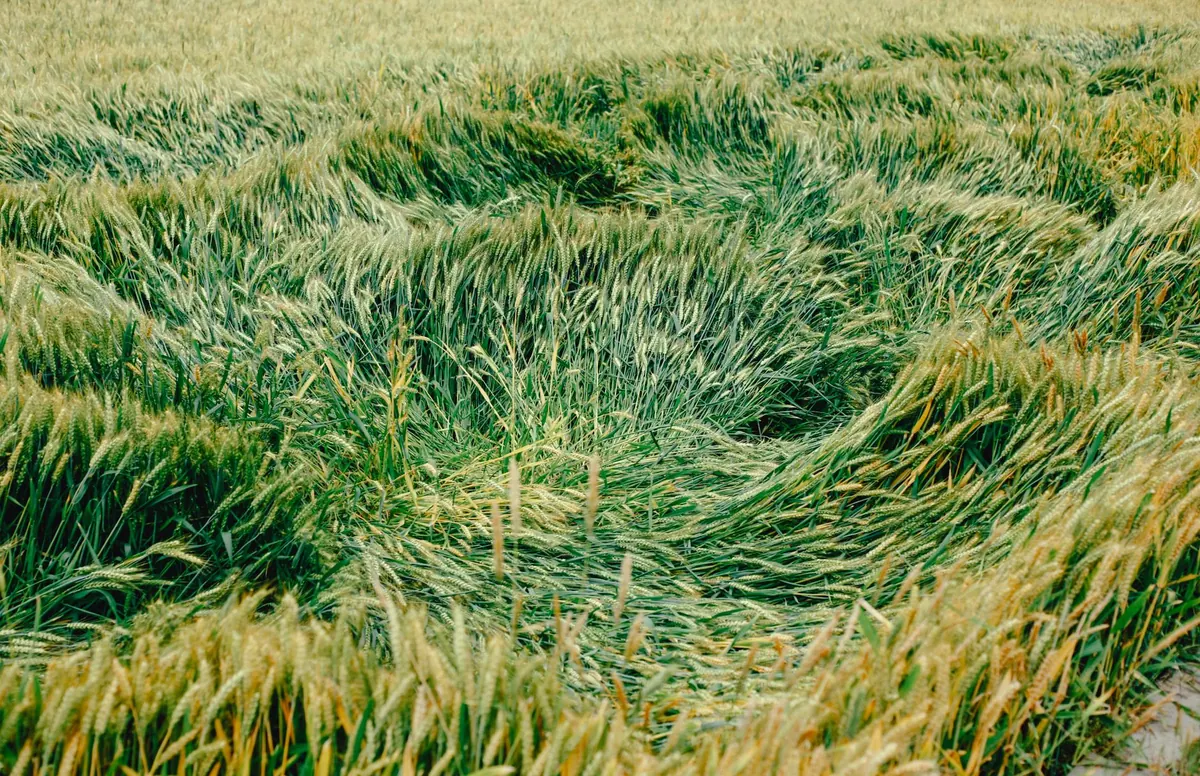
A winter wheat field is a visible commitment. In autumn, it puts a soft green stripe through a countryside turning brown. In winter, it sits low and muted, holding soil against rain and wind. In spring, it wakes up fast, closing over the rows and turning the field into a dense, wind-combed surface. By summer, it has gone gold, and the combine’s work becomes the loudest thing for miles.
That rhythm shapes more than the view. Winter wheat fits into crop rotations, helping break disease and weed cycles that build up when the same ground is worked the same way every year. Its roots and residue protect soil through the wettest months. It also gives livestock farms and mixed farms another source of straw and feed, though the balance depends on the region and the season.
And it shapes baking traditions because it shapes what local mills can buy. Many bread wheats are winter types; different varieties bring different protein levels, dough behavior, and milling qualities. Millers blend to get consistency, but the harvest year still leaves a fingerprint. In Italy, wheat and bread are regional conversations—about crust, crumb, keeping quality, and what a loaf is for. Winter wheat is part of that conversation, even when no one at the table names the season it grew through.
A Crop with a Job Beyond Grain
Winter wheat earns its place on many farms for reasons that have little to do with the price of a loaf. Because it covers the ground through autumn and winter, it helps shield soil from heavy rain and wind when fields would otherwise be bare. That cover is not a cure-all—compaction, nutrient loss, and erosion still depend on slope, soil type, and management—but a well-established wheat field is often a better winter cover than open stubble.
Its place in rotation matters too. Breaking a cycle of the same crop can reduce the buildup of certain diseases and weeds, and wheat residue can be managed for the next crop rather than simply burned or removed. Mixed farms may value the straw for bedding or feed, while arable farms may use it to protect soil or add organic matter. These benefits are practical, not romantic: they show up in fuel use, soil structure, and the cost of the next season’s inputs.
- Soil cover: living roots and residue can reduce erosion during wet winters.
- Rotation: a different crop can interrupt pest and disease cycles.
- Straw and feed: useful on mixed farms, though value varies by year and region.
- Timing: an early harvest can open a window for a following crop or cover crop.
In the Mill and the Kitchen
Cold-season grain does not automatically make better flour, and it does not guarantee a better loaf. Variety, soil, weather, harvest timing, storage, and milling all have a say. But winter wheat often gives bakers a flour with enough strength for bread and enough character to notice. The practical move is to ask questions: Which variety is this? When was it harvested? How was it stored? A local miller usually knows, and that information helps you adjust.
At home, treat a new flour as an ingredient to learn. Start with a simple loaf or flatbread so you can taste the flour itself. Adjust water gradually, because local flour can absorb differently from a supermarket blend. Give the dough time; some fresh flours benefit from a longer rest or a gentler fermentation. If the flour is whole grain, expect it to be thirstier and to ferment faster in warm weather. Keep notes on hydration, rise, and crumb, and you will learn more from three small bakes than from one ambitious project.
Storage matters as much as milling. Flour and grain keep best in a cool, dry, dark place, protected from pests and moisture. Whole-grain flour ages faster than white flour because the germ and bran are still in the mix; buy it in amounts you can use, or freeze a portion if you bake slowly.
Reading a Local Loaf
A local loaf can be a lesson in weather without anyone intending it. A wet harvest year may bring grain that needs careful drying; a hot finish may bring stronger gluten or different milling behavior. Bakers rarely get a label that explains all of this, but they taste the result in crust color, crumb openness, and how the dough handles. This is why the same recipe can behave differently from one bag of local flour to the next.
Good bread is not only a recipe. It is a conversation between soil, season, mill, and baker.
That conversation is easiest to join at a farmers market or a mill that names its varieties. Ask what the flour is meant for: everyday bread, pastry, pasta, or feeding a starter. A wheat that makes a sturdy country loaf may not be the best choice for a delicate cake, and a soft wheat may disappoint a baker looking for a tall open crumb. None of this makes one wheat better than another. It makes the match matter.
A Note for Small Growers and Gardeners
Winter wheat is not only a field crop. Gardeners with a sunny patch and decent drainage can grow a small stand for flour, chicken feed, or straw, though the scale is different and the margin is usually measured in experience rather than money. The same principles apply: choose a winter-hardy variety, sow into a firm bed, keep records, and protect the soil from winter erosion. A small plot can be harvested with a sickle and threshed by hand, but it is slow work; many gardeners grow wheat more for seed-saving, education, or curiosity than for economy.
For anyone tempted to try, start small and local. Ask which varieties have wintered well nearby, and watch how the crop behaves through freeze and thaw. The first year is a lesson in patience. The second is usually a lesson in what the first year’s notes were trying to say.
Winter wheat matters because it turns the quiet season into productive work. It holds ground, feeds rotations, supplies mills, and gives bakers a reason to pay attention to where their flour began. The fields may look empty in January, but they are not. Beneath the surface, roots are working, crowns are waiting, and the next harvest is already under way.
Photo: Celeo Sun / Pexels